
1.2 Persons with Disabilities an Resources
CBR identifies resources within its community for sustainability. Therefore, the core stakeholders of CBR implementation are basically community members with professional CBR workers who could be from outside the community. CBR workers and persons with disabilities from outside the community should not control the project but rather play supportive roles. Community people, particularly persons with disabilities, ought to have ownership of the CBR program since it is persons with disabilities who know the real needs in their communities.
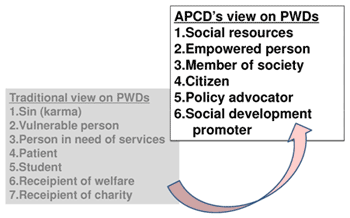
APCD’s perception of persons with disabilities is that they are resource persons and implementers of CBR. The traditional view of persons with disabilities is that their disabilities are the result of sin (karma); they are vulnerable persons, persons in need of health services, patients, students, recipients of welfare and/or charity. APCD’s view of persons with disabilities is they are a community resource, empowered persons as “agents of change”, members of society, policy advocators and social development promoters. Persons with disabilities know their needs and can be trained to implement CBR as members of the community. Therefore, persons with disabilities are valuable implementers of CBR.
 |
The United Nations Convention on the Rights of Persons with Disabilities (CRPD) clearly identifies “the rights to live in the community” and to receive all types of rehabilitative services. CBR is considered an essential factor of inclusive community development. CRPD includes CBR components in several articles, for example, Living independently and being included in the community (Article 19), Education (Article 24), Health (Article 25) and Habilitation and rehabilitation (Article 26). |